A garage door is easy to consider given until it stops midway, makes a sharp bang, or rejects to open up when you are already late. Then it ends up being apparent what it really is: the largest relocating things in most homes, commonly evaluating more than 100 pounds, sometimes a lot more, and running under sufficient spring tension to create major injury in a split second.
That is why the DIY versus specialist concern matters a lot more here than it does with numerous various other home repair services. Repainting a space severely typically sets you back time and pride. Managing a garage door the upside-down can cost fingers, eyesight, vehicle damage, or a journey to the emergency room. I have seen home owners effectively tighten loose equipment, replace climate removing, and reprogram a garage door opener easily. I have likewise seen tracks bent irreparable due to the fact that somebody required a door that was already off balance, and I have actually seen torsion spring jobs tried with the wrong devices, which is just one of the fastest methods to transform a repair work right into a hazard.
The much safer selection depends on the precise trouble, the door system, and the individual doing the work. Some jobs are reduced risk and well within reach for a careful property owner. Others belong squarely in the hands of a skilled technician. The fundamental part is recognizing the distinction prior to you start.
Why garage doors are various from regular home repairs
A garage door looks simple from the outside. Panels increase, panels come down, opener does the lifting. In truth, the opener normally guides the motion more than it does the hefty lifting. The actual muscle mass comes from the spring system, either torsion springs mounted above the door or expansion springs running together with the horizontal tracks. Those springs shop and launch power every time the door moves.
That saved power is what makes garage door repair a various category of job. An appropriately balanced door should feel surprisingly light when separated from the opener. An unbalanced one can drop hard, strain the opener, twist the tracks, and snap cables. When a spring breaks, people frequently explain it as sounding like a gunshot inside the garage. That is not an exaggeration.
There is additionally the issue of weight and geometry. Garage doors relocate via a led arc on rollers and tracks. If one side binds or one cable slips, the whole assembly can rack out of placement. What starts as a basic squeak can come to be a jagged door hanging under stress. At that point, brute force is the worst feasible strategy.
For commercial garage door repair, the stakes can be also greater. Business doors are often bigger, heavier, cycled extra regularly, and paired with higher-duty equipment. The very same fundamental principles apply, yet the loads and repercussions enhance. A mistake on a rolling steel service door at a storage facility is not simply a house owner trouble, it can shut down gain access to, influence deliveries, and create an office security issue.
The repair work home owners can typically deal with safely
There is a practical happy medium between doing every little thing on your own and asking for every minor sound. A homeowner with persistence, a ladder, basic hand tools, and the determination to follow the maker's directions can usually handle routine maintenance and a couple of low-risk fixes.
Tasks like cleaning photo eyes, replacing remote batteries, checking whether the wall control has a lock setting allowed, and lubricating rollers, hinges, and springs with a garage-door-safe lubricant are generally straightforward. So is visually evaluating the tracks for particles or noticeable obstructions. Weather condition seal substitute on the bottom or sides of the door likewise often tends to be workable, especially when the door itself is or else operating correctly.
Small adjustments to opener settings can likewise be sensible, yet only if you recognize what you are transforming. Traveling limitations and force setups affect exactly how much the door actions and just how much resistance the opener tolerates before reversing. Set those improperly and you can end up with a door that does not close totally, crushes the lower seal right into the floor, or stops working to turn around when it should. The owner's hands-on issues here. So does restraint.
A lot of household garage door repair calls turn out to be basic problems a homeowner can have identified securely from the ground. I have seen doors that "fell short" due to the fact that the manual lock was involved, openers that seemed dead because a GFCI electrical outlet had tripped, and safety sensors that blinked due to the fact that a trash bin gently bumped one bracket out of positioning. Those are good examples of do it yourself being flawlessly appropriate.
Where do it yourself comes to be risky fast
The line gets went across the moment stress, weight, or architectural positioning enters into the job. Spring systems, lift cords, lower braces, drums, and significant track modifications are not newbie work. Neither is a door that has actually come off its tracks or one that is noticeably uneven when raised.
Garage door springtime substitute is the most common example. Several property owners seek out a video, order springtimes online, and think careful job will certainly suffice. Occasionally they survive it. Sometimes they do not. The real issue is that garage door springs are not simply components, they are packed mechanical elements matched to a details door weight and height. The winding process needs the best bars, the right number of turns, safe collection screws, and a solid understanding of balance testing. Making use of screwdrivers rather than winding bars, which still occurs more frequently than it should, is among those options that can go wrong instantly.
Cables develop a similar false sense of simpleness. A torn wire looks like a rope that requires replacing. In technique, it becomes part of a system under tons, linked into drums, bottom components, and springtime stress. If a cable has actually come off one side, there is typically a factor. It may be a broken spring, a curved track, a seized roller, or an irregular door. Changing or resetting the cord without identifying the cause frequently creates a repeat failure.
Garage door opener issues also have layers. If the opener electric motor hums and the door barely relocates, the origin problem might not be the opener in all. Maybe a damaged springtime, removed equipment, locked trolley, misaligned track, or door inequality. Replacing a garage door opener without resolving a heavy door is costly and short-lived. A new opener can not make up for negative mechanics for extremely long.
A functional way to decide
When home owners ask me whether they should attempt a repair service, I usually inform them to evaluate the situation by risk, not confidence. Confidence is unreliable. Threat is concrete.
If the fixing can be made with the door totally shut, without touching tensioned components, and without putting any part of your body under a suspended load, it may be an affordable DIY job. If the repair service includes relaxing springtimes, loosening up bottom braces, resetting cables, correcting the alignment of tracks that are supporting a loaded door, or compeling movement when something is obstructed, it is time to stop.
Here is a helpful general rule for the ordinary household. If you can securely detect the problem with a flashlight, a ladder, and the proprietor's guidebook, you might have the ability to repair it. If the following step needs specialized bars, clamps, deep mechanical judgment, or guesswork about spring tension, you are outdoors secure DIY territory.
The concealed price of obtaining it virtually right
A garage door does not have to stop working totally to come to be harmful. A repair service that is just "close sufficient" can reduce the life of pricey components and develop a delayed problem.
Take door balance. If the springtimes are a little mismatched after a repair, the opener might still raise the door. That can deceive a property owner right into believing the work was successful. But an opener that needs to combat additional weight every cycle wears gears, strains the rail, and gets too hot the motor. Over a couple of months, a small spring blunder becomes a much larger bill.
Misaligned tracks produce similar difficulty. A track can be close enough for procedure while still creating rollers to use unevenly, hinges to bind, and the door to shake itself loose with time. The property owner hears more sound, includes a lot more lubricating substance, and misses out on the real issue.
This matters even more with garage door setup. New doors require to be matched to the opening, sustained appropriately, sealed properly, and balanced specifically. A bad installation may look penalty on day one and reveal its flaws in the very first season of temperature level swings. I have actually seen doors with inadequate top area alignment leakage water and cool air, and brand-new installs with under-sized springs that made the opener work far harder than it should. Expert installment is not practically rate. It is about obtaining the system right from the start.
Safety attributes help, yet they do not make high-risk repairs safe
Modern openers include picture eyes, auto-reverse systems, rolling-code remotes, and guidebook launch features. Those are beneficial protections, but they are frequently misconstrued. The auto-reverse function, as an example, protects against entrapment during closing. It does not make spring job secure. Image eyes can protect against a door from shutting on a child or pet dog. They do not protect against a cord from whipping loose throughout a failed repair work attempt.
The handbook launch cable is an additional fine example. It is there so you can detach the opener and operate the door by hand during power outages or troubleshooting. However if the springtime is broken and the door is hefty, drawing the release without recognizing the balance can leave you holding a door that wishes to pound down. I have actually enjoyed individuals learn that lesson the tough way.
Safety systems are a layer, not a replacement for mechanical control.
When calling a professional is clearly the much safer choice
There are scenarios where hesitation just loses time. If any of the following hold true, specialist aid is the safer course:
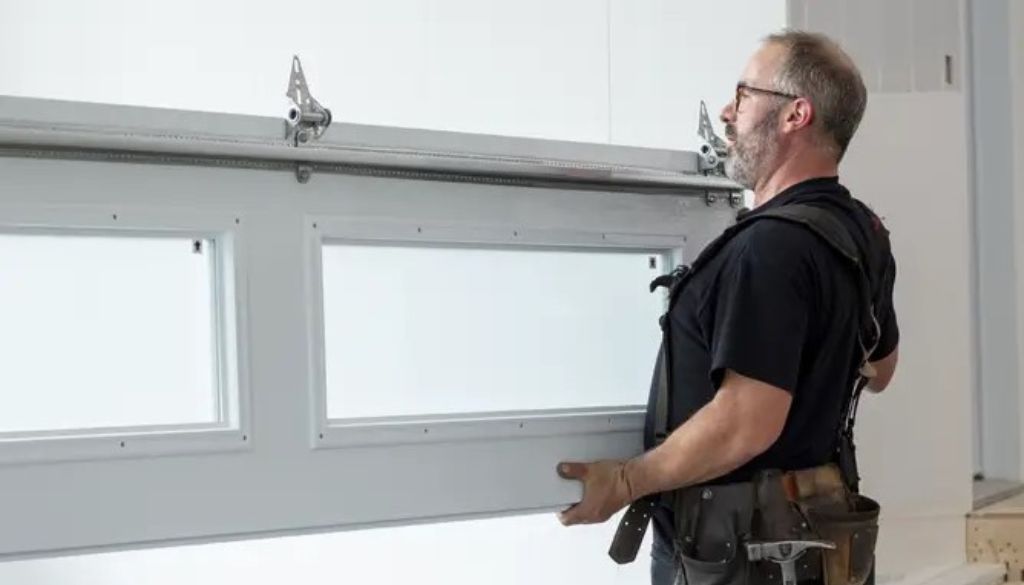
That listing covers the majority of the high-risk contact both property garage door repair and light business garage door repair. It is not remarkable, simply functional. When pressure and kept power are entailed, competence matters.
What a specialist brings that a video cannot
Skill is just component of the answer. Tools and pattern acknowledgment matter just as much.
An experienced specialist can often listen to a problem prior to fully seeing it. The noise of a completely dry bearing, a chain established also limited, a loose joint, or a springtime that has stumbled in time is distinct when you have functioned around enough doors. That type of experience shortens medical diagnosis and prevents the typical mistake of changing the wrong part first.
Professionals also carry the right equipment. Springs are chosen by cable size, inside size, length, and door weight needs, not by rough visual comparison. Rollers can be found in various stem lengths and products. Track spacing, drum kinds, cable television lengths, and opener compatibility all issue. A property owner often shops by appearance. A service technician generally stores by specification.
There is one more advantage people do not always think about: accountability. Trusted business back up their work. If the door is still out of balance, if the opener force needs a last tweak, or if a freshly mounted part reveals an associated weakness, you have somewhere to call. That is worth more than individuals confess, especially when the garage door is the primary daily entrance to the home.
The money question, honestly
DIY is often framed as the less expensive path, and occasionally it is. If all you need is lube, a substitute remote, fresh batteries, brand-new weather seal, or sensing unit positioning, doing it yourself can conserve a solution call and make perfect sense.
But expense contrasts get misshaped when individuals neglect risk and remodel. A home owner might conserve money on paper by attempting Garage door spring replacement alone. If the springs are incorrect, the winding is unequal, the opener gets harmed, or a lorry panel obtains nicked by a falling door, the financial savings disappear swiftly. Also without injury, one failed effort can cause paying for emergency situation service plus the parts you currently bought.
Professional work also tends to be more efficient in diagnosing the entire system. A technician dealing with a garage door opener problem might see cracked joints, maturing rollers, and a door that is running 5 pounds as well hefty on one side. Fixing those with each other can avoid serial failings. Do it yourself frequently treats symptoms individually, which really feels cheaper till the second and 3rd troubles reveal up.
For services, the computation is much more direct. Industrial garage door repair usually affects staffing, filling routines, safety, and customer accessibility. Downtime can cost much more than the fixing itself. Because setup, trying to save money with improvisated solutions generally backfires.
The tasks that make good sense for careful homeowners
For homeowners that wish to remain involved without entering unsafe territory, this is the zone I suggest:
Clean and line up image eye sensors. Lubricate hinges, rollers, springtimes, and bearings with the right product. Replace remote batteries, keypads, and some wall controls. Inspect climate seals and replace used bottom or boundary seal material. Test door equilibrium only if you comprehend the manual launch and the door is otherwise running normally.That last point is entitled to care. An equilibrium examination can be useful, yet just on a door that is currently moving usually and only with the opener detached according to the guidebook. Increase the door partway and see whether it remains in place. If it drifts hard up or down, reconnect the opener and call a pro. Do not begin professional fix garage door changing springtimes since the examination informed you something is off. The test is for medical diagnosis, not license.
A couple of real-world scenarios
A homeowner listens to a loud pop and finds the door opens a couple of inches, then quits. The opener is still powered, the rail steps, and the remote works. This is classic spring failure area. The much safer selection is expert service. Remaining to run the opener can burn out equipments or bend hardware.
Another home owner notices the door will certainly not close unless they hold the wall surface button down. In many cases, that indicate picture eye imbalance or sensor blockage. Clean the lenses, inspect the braces, see to it both indication lights show typical condition, and clear anything in the beam of light. That is an affordable do it yourself very first step.
A third home owner sees one side of the door hanging less than the various other. Perhaps a cable television came off, perhaps a roller left the track, maybe a springtime concern caused the door to rack. Either way, do not keep biking it. A jagged door is unpredictable. That is a service call.
Then there is the typical "brand-new opener" mistake. Somebody changes the garage door opener since the old one struggled, just to discover the new system has a hard time too. The real trouble was an out of balance door or worn spring system all along. This happens often sufficient that I rarely presume the opener is the key failure up until the door itself passes an equilibrium check.
How to pick the right service company
Not all professional help is equivalent. The more secure option is only more secure if the individual doing the job knows the trade.
Look for a business that works with your kind of system routinely, describes the problem plainly, and agrees to distinguish between urgent fixings and optional upgrades. Good technicians do not require theatrics. They can show you the used component, discuss why it stopped working, and inform you what happens if you delay the repair work. That sort of plain talk is normally a far better sign than a hard sales pitch.
For garage door installation, ask about insulation options, cycle ratings for springs, opener compatibility, and warranty protection. For industrial garage door repair, ask whether they service the particular door kind on your building, such as sectional steel, rolling steel, or high-speed doors. Accuracy issues because these systems are not compatible in practice, also when they look similar from a distance.
The more secure selection, a lot of the time
For low-risk upkeep and basic troubleshooting, DIY can be practical and cost-efficient. House owners ought to know just how to clean sensing units, lubricate moving parts, look for obvious blockages, and recognize basic garage door opener features. That type of participation often aids capture small issues prior to they grow.
But once a repair work includes spring stress, cords, architectural placement, hefty lifting, or unpredictable medical diagnosis, expert garage door repair comes to be the more secure choice by a wide margin. That is specifically real for Garage door spring replacement, off-track doors, significant opener problems linked to balance, and almost all business garage door repair situations.
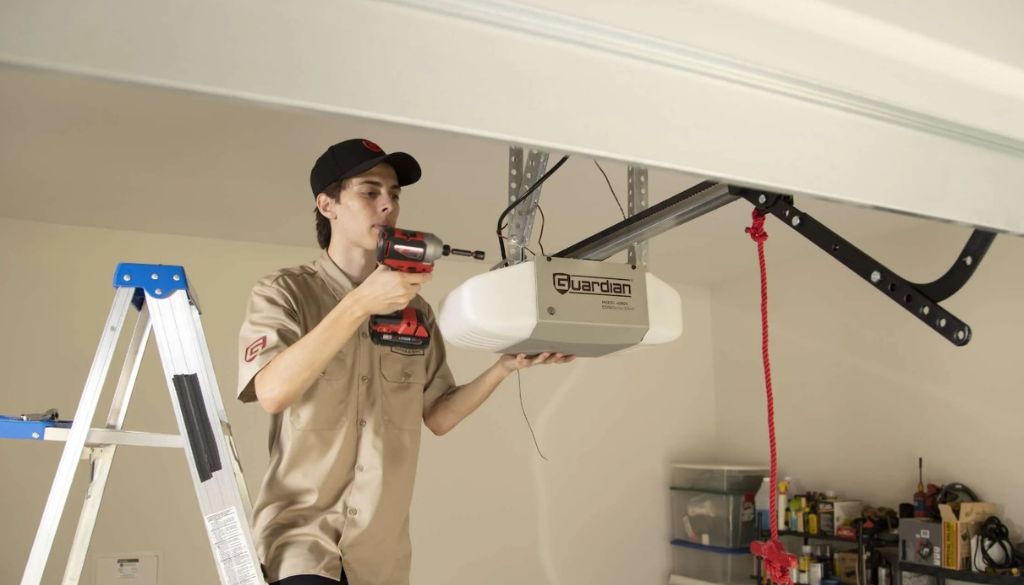
A garage door is not simply one more comfort appliance. It is a crammed mechanical system that works hard, commonly numerous times a day, with very little space for careless improvisation. Respecting that is what keeps a minor hassle from becoming a major accident.