A garage door usually gives cautions before it stops working entirely. The issue is that numerous homeowners cope with those cautions for weeks or months since the door still opens up, still closes, or still appears "good enough." That delay is where little repair service bills develop into expensive solution telephone calls, broken automobiles, and authentic safety risks.
In property job, the immediate instances tend to adhere to a pattern. A homeowner notifications a new grinding sound, a sluggish begin, a jagged door, or a remote that works only half the time. They presume it is an annoyance. Then one early morning the door jams halfway open before work, or a spring breaks during the night with a sound audible to rattle your house. Already, what could have been an uncomplicated solution has usually become a bigger work involving bent equipment, a stretched garage door opener, or a door that is no more risk-free to use.
Residential garage door repair is not practically benefit. These doors are hefty, tensioned, and mechanically ruthless. A common dual garage door can consider more than 100 pounds, and far more if it is wood or protected steel. The springs and cords are developed to take care of that weight efficiently. When one component begins failing, the rest of the system soaks up anxiety it was never implied to carry.
If your garage door has begun acting differently, the inquiry is not whether it needs attention. The actual inquiry is just how promptly you require to act.
When "a little off" really implies urgent
Homeowners commonly expect significant failure to look dramatic. Sometimes it does. A snapped spring is apparent. A door hanging at an angle is apparent. However several urgent repair work circumstances start with subtler signs, local garage door maintenance services the kind you can conveniently rationalize if you are busy.
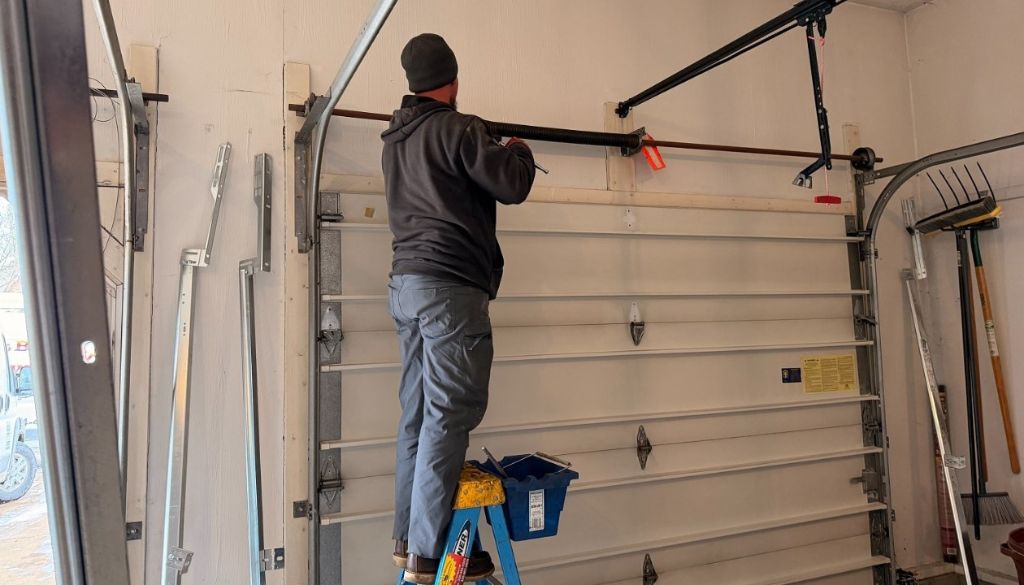
A healthy and balanced garage door ought to move equally, audio reasonably smooth, and react consistently. It ought to not tremble, think twice, bang, drift, or require the opener to work harder than common. Even if the door still finishes the cycle, a recognizable adjustment in just how it acts is commonly the earliest sign of mechanical trouble.
The necessity comes from just how connected the system is. Used rollers can draw on the track. A weak springtime can overload the opener. A torn cable can cause one side to go down. A misaligned track can make the door bind, which enhances pressure on joints and brackets. What starts as one worn part can come to be several broken parts quickly, particularly if the door is used several times a day.
The door is all of a sudden louder than it made use of to be
Noise is among one of the most trusted early signals. Garage doors are not quiet, and no professional must guarantee that. However there is a clear difference in between typical operating sound and a door that has actually established a new clank, squeal, scrape, pop, or rumble.
A metallic grinding audio typically points to used rollers, completely dry bearings, or equipment that has loosened with time. A sharp bang can show a broken springtime, which several property owners mistake for something falling inside the garage. Repetitive squealing might indicate the system requires modification, lubrication, or replacement of moving parts that are no longer tracking correctly.
The crucial information is modification. If your door has always had a reduced hum and currently seems like it is dragging a tool kit, that matters. In the area, unexpected noise increases typically turn up just before an extra serious break down. One typical instance is a torsion spring nearing failing. The door may start sounding larger and rougher for days before the spring ultimately gives out.
If the noise is coupled with jerking, postponed movement, or visible drinking, treat it as urgent. Remaining to run the system can harm the opener electric motor or strip internal gears.
The door opens unevenly or looks crooked
This is among the clearest signs that you need household garage door repair today. A garage door should climb and lower uniformly on both sides. If one side rests lower, raises slower, or shows up tilted in the opening, quit using it till it has actually been inspected.
An unequal door frequently points to cable issues, springtime imbalance, track damage, or a failing bottom bracket. Those are not aesthetic issues. They influence how the whole weight of the door is sustained. If one side sheds appropriate stress, the door can jam, decline suddenly, or spin enough to bend panels and tracks.
I have actually seen property owners keep using a door that was just an inch off level due to the fact that it still "functioned." A week later on, the cable television came off the drum and the door wedged itself hard into the opening. At that point, the repair service involved much more labor, more parts, and a greater possibility of panel damage.
Crooked operation is likewise tough on the garage door opener. The opener is designed to lead a balanced door, not drag an unstable one into position. If the door is stagnating directly, the opener becomes part of the casualty list.
It feels much heavier than normal
A properly well balanced garage door should not really feel like dead weight. If you disengage the opener and raise the door by hand, it should move with controlled resistance, not fight you all the way up. If it all of a sudden really feels much larger, the springs may be used, out of change, or broken.
This issues since springtimes bring a lot of the lifting lots. The opener is not there to do the hefty pulling by itself. When springtime stress declines, the opener makes up until it can not. That is when you obtain sluggish traveling, fell short starts, jerky activity, or a burned-out motor.
Heavy operation is among the greatest indicators that Garage door spring replacement may be required. Springs do not last forever. In several homes, typical torsion springtimes are rated for a finite cycle life, and that life gets used up faster in homes where the garage is the main entrance door. A family that opens and closes the door six to eight times a day can wear through springs far earlier than a house owner that uses the garage occasionally.
If the door feels heavy sufficient that you require actual initiative to raise it, do not keep examining it. That is a fixing telephone call, not a wait-and-see situation.
The garage door opener strains, hesitates, or turns around for no clear reason
A battling garage door opener is typically criticized initially because it is the noticeable machine with the remote and lights. In some cases the opener truly is the issue. More frequently, it is responding to a mechanical trouble somewhere else in the system.
A healthy and balanced opener ought to begin quickly, draw efficiently, and stop where it is expected to. If it hums yet does stagnate the door, turns around mid-cycle, stalls near the floor, or seems like it is functioning more challenging than before, something is incorrect. It could be travel settings, force setups, used equipments, sensor positioning, or electric difficulty. It can also be the opener trying to relocate a door that is no more balanced or effectively aligned.
This is where judgment issues. A door that reverses because a sensor lens is dirty is really different from a door that reverses due to the fact that the track is binding and the opener is striking resistance. Homeowners sometimes reset the opener repeatedly, which can briefly mask the signs and symptom while the underlying damage worsens.
If your garage door opener has actually come to be inconsistent, especially when paired with new sounds or hefty activity, have the full system inspected. Changing an opener without dealing with the actual reason is a common and pricey misstep.
The cables look frayed or loose
Garage door cable televisions do vital job under tension, and they deserve more regard than they usually get. If you observe fraying, unraveling strands, visible corrosion, or a wire that has actually gone slack or slipped off the drum, stop running the door.
Cable wear commonly begins gradually. A couple of busted hairs near the bottom brace may not seem like a lot, however those strands are a caution that the wire is shedding honesty. Once it stops working, one side of the door can go down suddenly. That can flex the track, damage the panel, and create a harmful situation for any person nearby.
Loose cords can also signal a springtime problem. When spring stress adjustments, the wire can lose proper winding and tracking. That is why cable television signs ought to never be considered in isolation.
This is not a diy location for many house owners. The combination of weight and springtime stress makes cable repair work harmful without appropriate tools and experience. Immediate service is the more secure choice.
The door pounds closed or goes down as well fast
A garage door ought to come down in a controlled method. If it pounds, drops much faster than regular, or feels like it intends to collapse down, do not utilize it again up until it has been repaired.
This symptom highly recommends a spring concern. In a well balanced system, the springs counter the weight of the door. Without that assistance, gravity takes control of. Also if the opener is still affixed, it may not have the ability to regulate the descent securely. Some openers are harmed in exactly this scenario because they are forced to manage a tons they were never created to restrain.
A fast-dropping door is one of one of the most immediate garage door repair scenarios as a result of the injury risk. Pet dogs, children, feet, bumpers, and kept items are done in the risk area. If your door gathers a thud as opposed to a smooth landing, treat that as a same-day problem.
The tracks are bent, loose, or pulling away from the wall
Tracks do not typically stop working without being noticed. You may see a gap where the brace ought to rest flush, an area of rail that looks bowed, or rollers that no more sit focused in the track. In some cases the very first hint is that the door shudders throughout travel or scrubs at one factor each time it opens.
Track issues can originate from influence, loosened installing hardware, long-term vibration, or a door that has actually been running out of equilibrium. Once the track geometry is off, the rollers no more follow a tidy course. That can cause binding, panel pressure, and ultimate derailment.
Homeowners are often lured to grab a hammer and flex the track back. That usually produces a rougher course and can make the trouble worse. Track alignment is more specific than it looks. Little mistakes affect roller travel, door seal, and spring tons distribution.
When the track is visibly harmed or loose, the repair must not wait. You are managing the framework that maintains the door moving safely.
The panels are fractured, bent, or separating
Panel damages is usually rejected as cosmetic, specifically if the door still opens up. Sometimes it is cosmetic. Sometimes it transforms the architectural actions of the entire door.
Modern sectional doors count on each panel and joint point to share lots appropriately. A broken stile, curved section, or panel joint that is beginning to separate can create flexing throughout traveling. That flexing changes tension onto hinges, rollers, and the opener arm. It can also shake off the way the door seals at the flooring and along the jambs.
A door damaged by a minor backing crash might not require full substitute, however it does require evaluation. The ideal decision depends upon the age of the door, the accessibility of matching panels, and whether the frame geometry is still real. In some cases, targeted residential garage door repair suffices. In others, garage door setup becomes the a lot more practical choice, specifically if numerous panels are jeopardized or the design is discontinued.
This is one area where homeowners gain from sincere compromise suggestions. An affordable panel patch on an older stopping working door can end up costing more over a year than changing the door with an appropriately fitted system.
Your energy costs and weather securing have changed
Not every immediate issue is remarkable. If the garage suddenly really feels much hotter, cooler, dustier, or wetter than typical, the door may no more be securing properly. That can come from panel bending, track imbalance, used bottom seal, or a door that is not shutting flush to the floor.
For connected garages, bad sealing matters more than individuals assume. It can impact surrounding space comfort, welcome moisture problems, and reveal saved products to temperature swings. If light is revealing under one side of the door or along the boundary where it made use of to sit tight, something has changed.
By itself, a worn seal may not be an emergency. Yet if the sealing issue appeared together with uneven travel, gaps, or influence damages, it may be evidence of a larger mechanical problem that should have prompt attention.
The remote jobs, yet the door acts unpredictably
Intermittent procedure produces a different kind of danger because it educates individuals to maintain trying arbitrary repairs. One day the wall surface button works but the remote does not. The following day both job, however the door quits midway. Then it shuts fine three times in a row and jams on the fourth.
That kind of variance can originate from electrical concerns, maturing reasoning boards, signal disturbance, failing safety sensors, or an opener that is starting to fall short internally. It can additionally occur when mechanical resistance crosses the opener's pressure limit only under certain conditions, such as temperature modifications or when a dry roller catches at a details point in the track.
A great specialist will certainly separate electrical faults from load-related faults rather than presuming all recurring concerns are opener troubles. That distinction issues. It is the distinction in between changing a board, readjusting sensing units, or attending to the underlying door mechanics first.
Signs that are worthy of same-day service
Some signs enable a short organizing home window. Others ought to be treated as immediate.
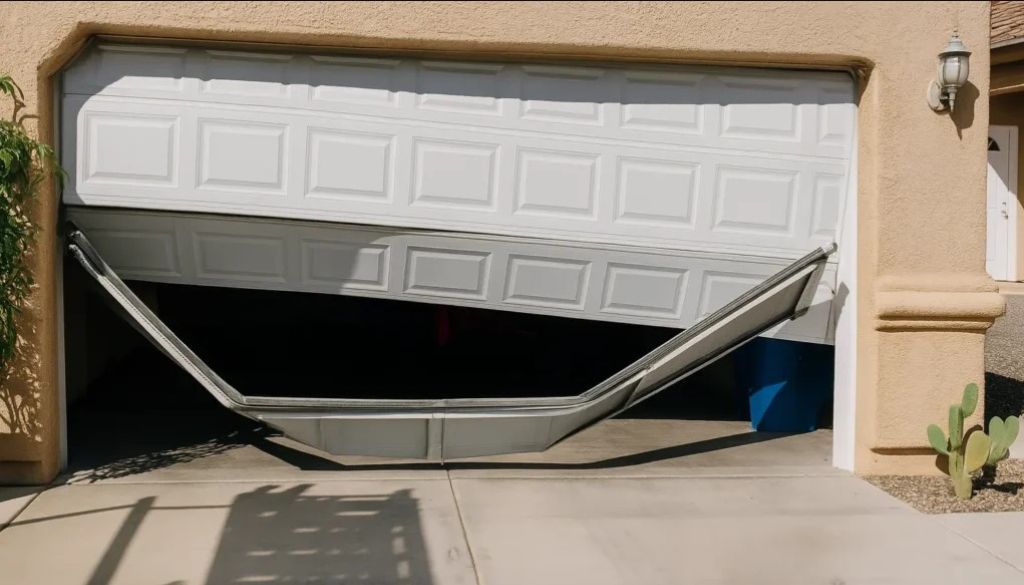
- The door is hanging jagged or partially off track A springtime has damaged or you listened to a loud breeze and the door came to be heavy Cables are torn, loose, or off the drum The door knocks shut, drops swiftly, or will not stay open The opener pressures hard against a stuck or jammed door
Those are not monitor-it-for-a-week scenarios. They carry real safety problems and usually create additional damages if the system is compelled to operate.
Repair or replace, making the appropriate call
Not every immediate problem suggests the whole door requires to go. Numerous service calls end with a focused repair service: springtime substitute, cord substitute, roller and hinge job, track adjustment, sensor repair work, or garage door opener solution. Excellent residential garage door repair ought to solve the real failure, restore secure balance, and leave the remainder of the system operating smoothly.
Still, there are times when substitute is the far better financial investment. If the door is older, panels are severely damaged, insulation is bad, and numerous parts are near the end of their life span, garage door setup might make more sense than stacking repair work expenses. That is especially real if components are outdated or the opener is additionally maturing out.
Homeowners occasionally ask whether business garage door repair experience issues when picking a service firm for a home. It can, gave the firm also does strong household work. Business systems often entail larger doors, stricter upkeep methods, and extra demanding cycle counts. Technicians that understand those systems tend to value equilibrium, lots, placement, and safety and security treatments. The fundamental part is that they apply the ideal service for a residential door, not a one-size-fits-all approach.
What you can securely check prior to calling
There are a couple of monitorings a house owner can make without taking dangers. The keyword is observe. You do not require to take apart anything to collect valuable details for a solution call.
- Watch whether the door moves uniformly and listen for where the sound begins Look for torn cables, bent track sections, loose braces, or noticeable voids in seals Check whether the safety sensing units are obstructed or misaligned Note whether the opener light flashes or the system reverses at the very same place each time If safe to do so, examination hands-on lift just after detaching power and just if the door is completely closed
Do not loosen spring hardware, get rid of brackets, or effort cable television work. Those components keep force that can injure you quickly.
Why waiting normally sets you back more
The surprise price of delay is not only the repair work itself. It is the domino effect. A weak springtime wears out an opener. A crooked door flexes a track. A loose roller damages a joint. A damaged panel concessions door positioning and weather securing. What can have been a solitary service check out becomes a multi-part repair.
There is also the timing issue. Garage door failings rarely take place when it is convenient. They happen when you are attempting to leave for school drop-off, draw the cars and truck in during a storm, or protect the house at night. If the garage is your main point of access, a handicapped door impacts life immediately.
Fast activity tends to produce cleaner, less costly fixings because the professional is addressing the main fault before it waterfalls right into additional damages. That is one reason experienced companies ask in-depth concerns over the phone. The sound, rate, angle, and actions of the door often disclose exactly how immediate the situation is prior to the truck also arrives.
The requirement to anticipate from a correct repair
An actual repair service does greater than get the door relocating when. The system must be evaluated for balance, traveling, equipment condition, and security function after the damaged component is addressed. If you have a springtime changed, the door ought to be examined for appropriate lift and hold. If you have wire or track job done, the specialist must validate placement and roller travel. If the opener was involved, force and turnaround setups need to be checked.
That issues because garage door systems fail in patterns. Replacing only the most obvious damaged component without inspecting the remainder of the setting up is exactly how repeat service calls happen.
When your garage door begins sending indication, count on the adjustment in actions. Doors do not become noisy, crooked, hefty, or unpredictable for no factor. The earlier you deal with those indications seriously, the better your opportunities of maintaining the repair uncomplicated, the opener undamaged, and the door safe for everybody that makes use of it.