A garage door spring rarely fails without cautioning. The difficulty is that lots of people do not acknowledge the caution until the door is already stuck halfway open, slamming shut, or rejecting to move whatsoever. By that factor, what might have been an organized service call comes to be an urgent safety concern, typically at the most awful possible time, early in the morning, late at night, or throughout an active workday.
If you have ever before listened to a loud crack from the garage and assumed something fell off a rack, there is a great chance a springtime release. I have actually seen home owners invest hours fixing the garage door opener, changing batteries, resetting restrictions, and checking breakers, when the actual problem was a worn springtime that had merely reached completion of its cycle life. A springtime does the heavy lifting. The opener just overviews the door. Once the springtime deteriorates or damages, the entire system heads out of balance.
Knowing when to arrange a garage door spring substitute comes down to a mix of timing, noticeable condition, door habits, and risk tolerance. The best time is typically prior to the springtime breaks totally, not after. That seems apparent, however it takes a little context to understand what "before" truly looks like.
Why the spring matters greater than most individuals realize
Garage doors are stealthily hefty. A standard double door can evaluate a couple hundred extra pounds, and strong wood or shielded industrial versions can consider much more. Springs counterbalance that weight so the door can be lifted smoothly by hand or with a garage door opener. When the springtime is doing its job, the door feels regulated and reasonably light. When it is not, every other component of the system begins functioning harder.
That includes the opener, rollers, joints, cords, and tracks. In property garage door repair, this pattern shows up constantly. A house owner calls since the opener is straining, the remote feedback is inconsistent, or the door reverses for no noticeable factor. The source usually turns out to be a spring that is worn down and no longer balancing the door correctly. The opener is not falling short first. It is compensating for a problem elsewhere.
In commercial garage door repair, the risks can be also higher. A filling bay door with a tired spring can disrupt distributions, create downtime, and present a genuine threat to staff. Services generally recognize the cost of emergency situation failure much better than home owners do, which is why many commercial homes timetable service based on wear and cycle matter rather than waiting for a breakdown.
The clearest signs that replacement need to be set up soon
You do not require to be a professional to identify much of the typical warnings. Some are obvious, others are refined, however they have a tendency to turn up in patterns.
- The door feels much heavier than it used to, especially if you disengage the opener and try to lift it manually. The door opens a couple of inches and quits, or it starts to close and after that reverses. You hear loud popping, creaking, or an unexpected bang from the garage. The spring shows visible gaps, extending, rust buildup, or deformation. The opener stress, jerks, or appears to be doing even more job than normal.
A solitary symptom does not always imply the spring needs to be replaced that day, however 2 or 3 with each other generally warrant a service call. A door that has actually ended up being noticeably heavier is one of the toughest indications. Springs put on slowly, so property owners commonly adjust without realizing it. They push a little more challenging, hold the wall surface switch a bit much longer, or quit car parking inside due to the fact that the door is "acting up." Those are not typical adjustments. They are indicators the system is falling out of balance.
The timing question most homeowners ask
The practical version of the inquiry is not simply "when do springs damage?" It is "when should I act if the door still works?" That is where experience matters.
If the spring is undamaged yet the door is relocating unevenly, making new noises, or putting anxiety on the opener, schedule replacement soon, preferably within days as opposed to weeks. If a spring is visibly fractured, separated, or damaged, quit utilizing the door and timetable service immediately. If the door is hanging jagged or one side is less than the various other, there might be a cable problem connected to the spring failure, and that changes the safety and security picture.
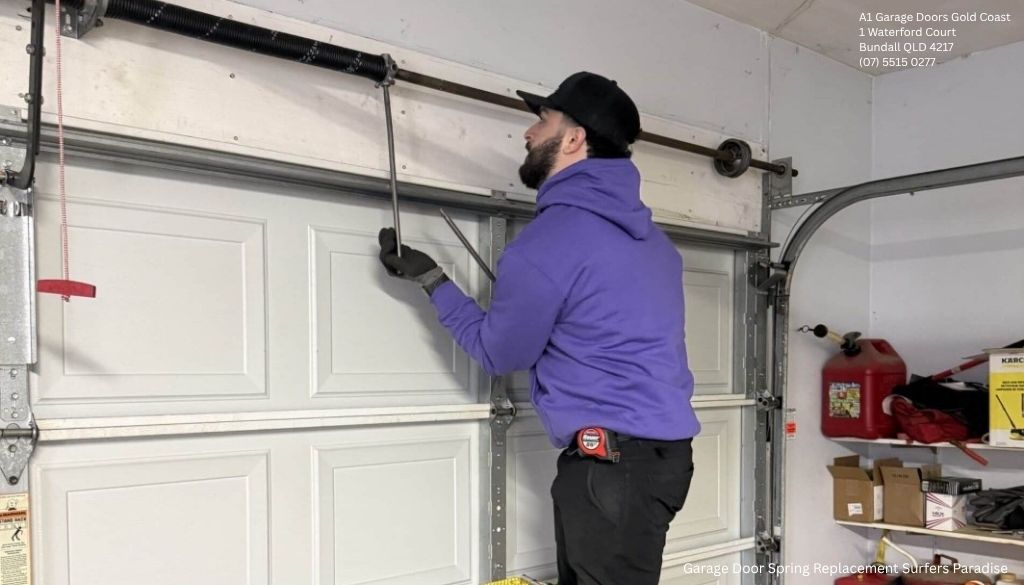
Springs do not typically improve with time. Once they are used, they continue to lose tension. Temperature level swings can make the actions more noticeable. Winter commonly subjects a weak spring since steel agreements and lubricating substances thicken, so a low system that operated in light weather condition can begin falling short in winter.
I have also seen doors act inadequately during humid periods, especially when corrosion has actually been quietly developing on the spring coils. Rust boosts rubbing and can reduce the life-span of the spring. If Have a peek at this website the spring has noticeable corrosion and the door is currently showing indications of imbalance, waiting hardly ever saves money. More often, it enhances the probabilities of added damage to the opener or hardware.
How long garage door springs generally last
Most torsion springtimes are ranked by cycle life. One cycle is one full opening and one full closing of the garage door. Requirement springs are frequently rated around 10,000 cycles, though higher-cycle options are offered. What that means in real life depends on just how commonly the door is used.
A household that opens up and closes the garage door four times a day may get about seven years from a conventional spring, offer or take. A hectic household utilizing it eight times a day may reduce that life-span almost in fifty percent. Include climate, upkeep habits, door weight, and installation quality, and the precise timeline can vary a lot.
That is why age matters, yet only as part of the image. If your springtimes are eight to ten years old and the door is your major access factor, replacement comes to be a proactive conversation also if you have actually not had a full failing yet. If they are only three years of ages yet the door was improperly stabilized throughout garage door installation, the springtimes might currently be under uncommon stress.
When a consumer tells me, "The door still opens up, but it appears harsh and seems larger than in 2014," and the springtimes are already well into their anticipated life span, that is typically the correct time to arrange garage door spring replacement. It is a lot more regulated, easier, and typically cheaper than awaiting an emergency.
Broken springtime versus weak spring
A damaged springtime usually makes the decision for you. The door will closed properly, or it may not open in any way. On a torsion spring system, you can commonly see a clear gap where the springtime has broken. On extension spring systems, the spring may dangle or show up overstretched. In any case, the repair is urgent.
A weak spring is more difficult because the door might still function. That is where individuals postpone also long. They assume that if the door steps, the issue is minor. Yet a weak springtime can harm the opener over time, particularly if the opener is compensating for extra weight each day. A garage door opener is made to move a well balanced door, not deadlift an unbalanced one.
You can think about a weak springtime like a tire with a slow-moving leakage. It is still technically usable, however every mile enhances the opportunities of a larger trouble. For property owners, that may indicate getting caught inside on a hurried early morning. For a company, it may indicate an inoperable service entrance throughout operating hours.
Why changing both springtimes usually makes sense
Many dual garage doors make use of a pair of springs. When one breaks, the various other may still be intact, but it has actually typically experienced the very same number of cycles and comparable wear. Changing just the failed spring can obtain the door functioning once more, yet it commonly leaves an older springtime in location that is stone's throw behind.
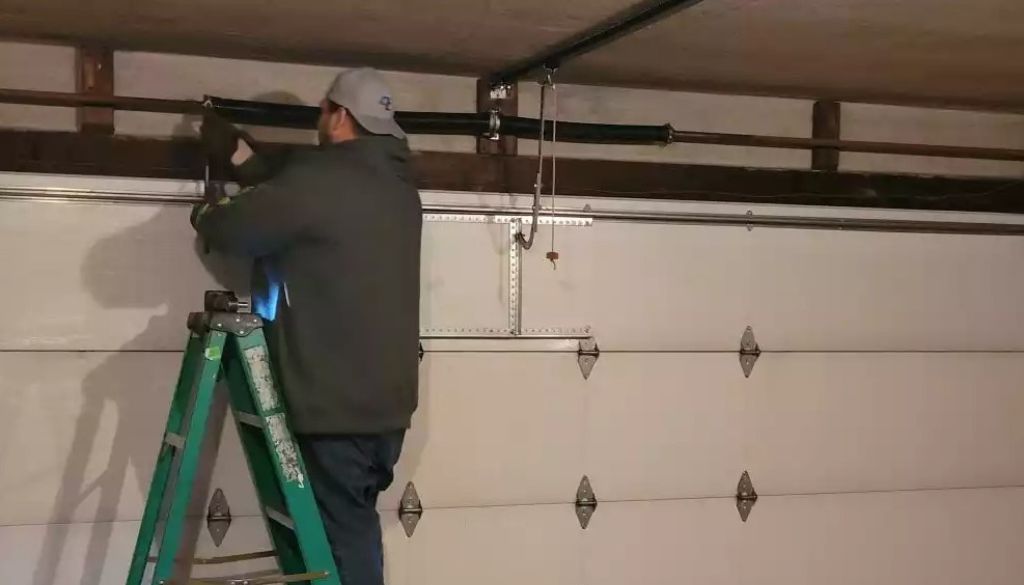
This is among those judgment calls that depends on age and problem. If the springtimes were installed together and one has fallen short after years of solution, changing both is frequently the smarter option. The cost distinction is usually much more manageable than spending for two different sees, and the door will be balanced extra continually. It additionally reduces the chance of a 2nd failing in the near future.
On the other hand, if one spring was changed just recently and the other is still in good shape, a service technician may recommend changing just the failed component. The factor is not to offer more components. It is to match the fixing strategy to the actual wear pattern.
The seasonal home window people overlook
Many home owners wait until the door stops working, yet there are better seasonal home windows for preventative solution. Early loss is a great time because temperature decreases have a tendency to disclose balance problems, and organizing is commonly less complicated before winter months weather increases emergency telephone calls. Springtime can likewise be a functional time, particularly if the garage has undergone a winter season with little maintenance.
If you are already intending domestic garage door repair, replacing aging springs prior to a difficult winter season or prior to a hectic summer season travel period is usually smart. Households rely greatly on the garage when institution timetables, sporting activities equipment, bikes, yard devices, and vacation storage space are done in activity. A springtime failure never ever feels well timed, however it is specifically turbulent when the garage functions as the house's major entrance.
For commercial properties, the timing should comply with use patterns greater than the schedule. If a facility has a door that cycles loads of times a day, springtime replacement ought to be tracked with solution documents and anticipated prior to peak failing risk.
What takes place if you wait too long
The most prompt danger is security. A stopping working spring can cause the door to drop faster than expected or come to be uncertain in motion. That matters whether the door is over a vehicle, near a child, or component of a work area with foot traffic.
There is additionally the devices expense. A battling spring can reduce the life of the garage door opener, fray cords, break rollers, and toss the door out of placement. What may have been a straightforward springtime substitute can become a bigger garage door repair entailing several components.
The inconvenience can be worse than the bill. An entraped car, a door stuck open over night, or a handicapped packing entryway produces pressure that leads individuals to make rushed choices. Emergency solution has its place, but prepared solution often gives you much better options.
I have seen home owners try to maintain a weak springtime going by readjusting opener pressure settings. That is not a fix. It simply masks the sign while raising wear somewhere else. If the door equilibrium is off, the spring system requires interest, not a stronger push from the motor.
Repair or replacement of the whole door?
Sometimes spring replacement is all that is needed. Other times, it makes good sense to step back and ask whether the whole door system is nearing completion of its beneficial life.
If the panels are in good shape, the tracks are audio, and the opener is trusted, replacing the springtimes is usually the appropriate step. It brings back risk-free operation without the expense of a complete garage door installation. However if the door is older, improperly shielded, nicked, rusting, or mismatched with the home's demands, spring failing can be the minute to consider a wider upgrade.
That shows up usually in older homes where the door is undersized, loud, or hard on the opener also after fixings. A brand-new door with the right spring system, correct harmonizing, and a compatible garage door opener can drastically improve efficiency and decrease recurring service calls. Still, not every aging door requires substitute. A solid professional should have the ability to tell you whether the springs are the main issue or whether they belong to a bigger decline.
What to do the day you suspect spring failure
The most safe response is generally easy, and restraint issues more than improvisation.
- Stop operating the door if it is jerking, pounding, or declining to lift normally. Keep individuals free from the opening, especially children and pets. Do not pull the emergency release unless you understand the door's weight and position. Avoid trying to replace or wind the springs yourself. Call a qualified garage door repair specialist and describe what changed.
That suggestions might sound mindful, yet it is made care. Springs shop considerable energy, and the tools and training called for to manage them safely are not optional. Numerous property owners are comfortable with basic maintenance, such as lubricating rollers or altering remote batteries, however springtime job falls under a various category.
If the garage is your only means to relocate an automobile, describe that when you call. Numerous service firms prioritize doors that are capturing an automobile inside or leaving the home unsecured.
The do-it-yourself temptation
A great deal of property owners are qualified and sensible, and many home repair services deserve discovering. Garage door spring replacement is not one I casually recommend as a do it yourself job. The danger is not hypothetical. Inaccurate winding, bad device control, wrong springtime sizing, or unsecured hardware can trigger extreme injury and significant property damage.
Even beyond safety, sizing issues. Springs require to be matched to the door's weight, elevation, and track configuration. A springtime that is as well solid or also weak can produce a various set of problems, including inadequate equilibrium, opener stress, and early wear. I have actually seen doors with fresh springtimes that still would certainly not remain halfway open since the incorrect parts were mounted. The property owner had actually conserved the service fee just to pay for improvement afterward.
An expert should examine the whole system during the repair service, not simply swap springtimes. That consists of cable televisions, bearings, center braces, drums, rollers, and opener setups. A door that broke a spring might likewise have hidden wear elsewhere.
Questions worth asking before you schedule
The top quality of the substitute matters practically as much as the timing. Not all springtime work are equivalent. If you are setting up solution, ask what cycle rating the new springtimes will certainly have, whether both springs must be replaced, whether the door will certainly be completely stabilized after installation, and whether the technician will certainly inspect related hardware.
For a home with constant garage use, upgrading to higher-cycle springs can be a wise long-term decision. The upfront distinction is typically moderate compared to the aggravation of one more replacement a few years later on. For companies, that estimation is also more clear, because downtime is expensive.
It is likewise worth asking whether the opener setups will be evaluated after the springtimes are set up. A properly well balanced door should relocate efficiently, and the opener needs to not seem like it is laboring. If the system was stressing previously, the adjustment after fixing should be noticeable.
A sensible regulation of thumb
If your garage door spring is damaged, visibly harmed, severely rusted, or causing the door to come to be hefty and unpredictable, schedule replacement today. If the springs are several years right into regular usage and the door is your major access point, do not wait on failing to compel the concern. Proactive replacement is usually the safer and a lot more cost-effective move.
That is especially true when the initial indications are refined. A slower lift. A louder opener. A door that no longer feels balanced by hand. Those are typically the little warnings that turn up weeks or months before a full break. Focusing on them can spare you an emergency situation call, protect against collateral damage, and maintain an everyday benefit from becoming a genuine disruption.
Garage doors are very easy to neglect when they function. Springs make certain they function. When they start informing you they are exhausted, it deserves listening.